For someone who lives movement as a refuge, dance is more than a bond with the body.
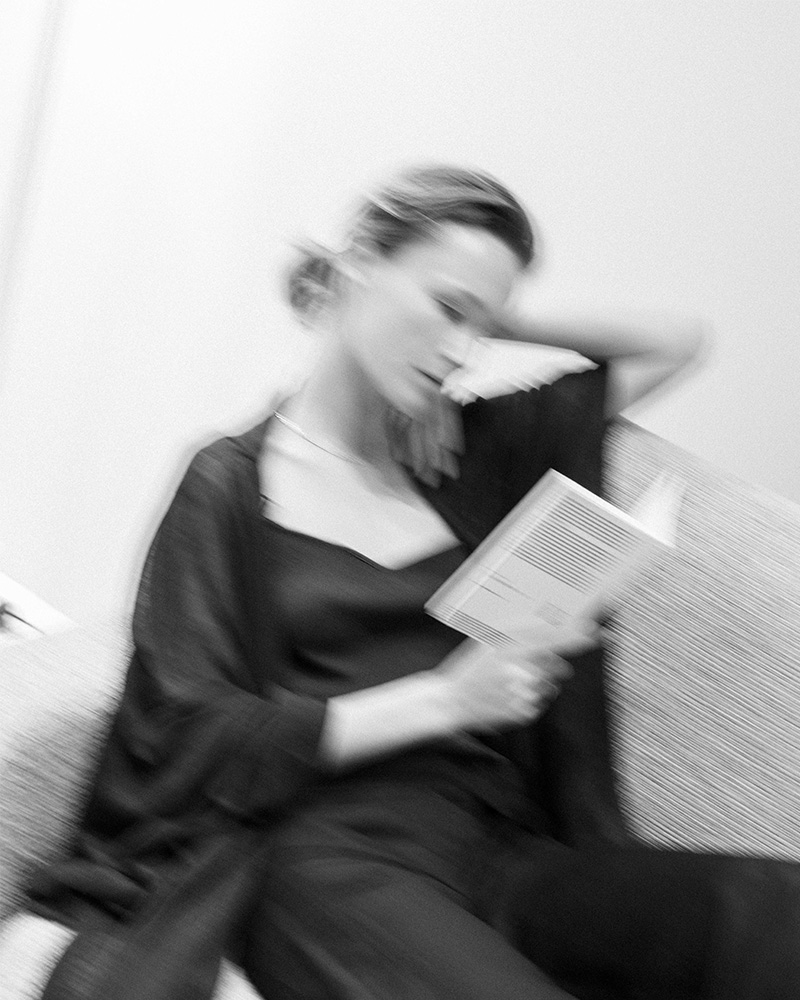
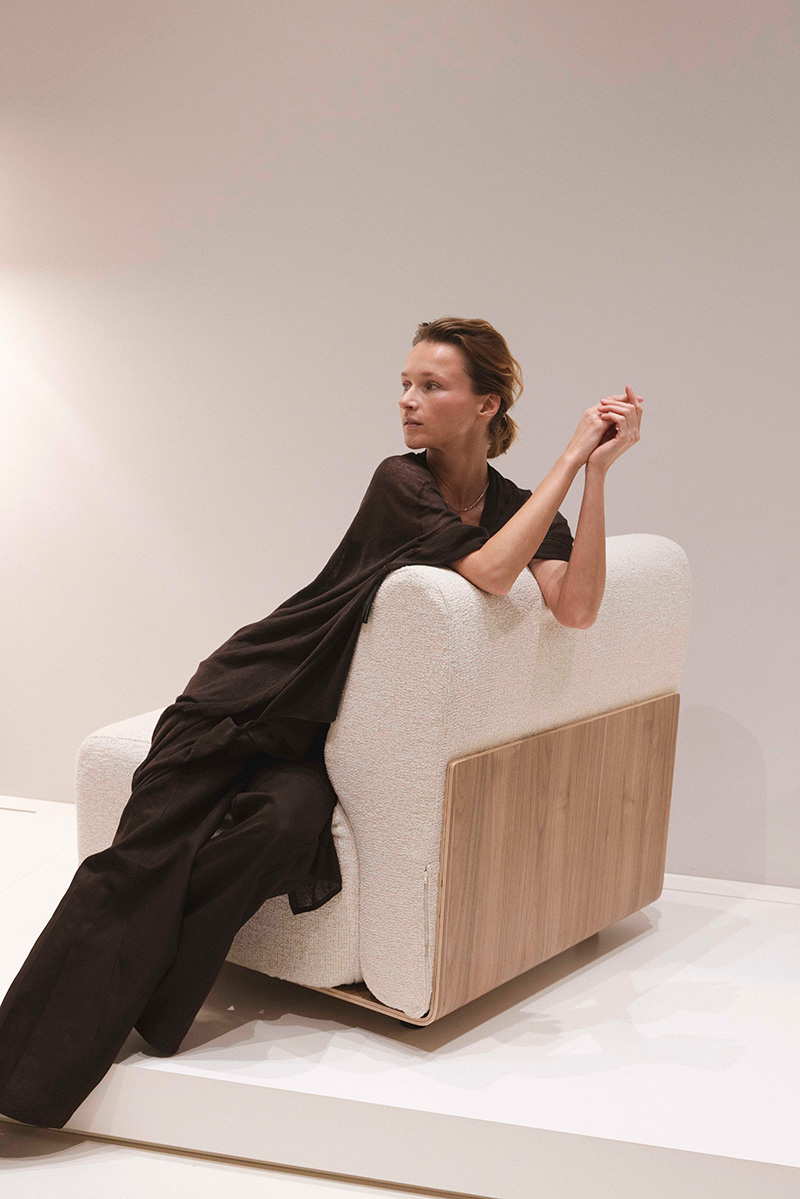
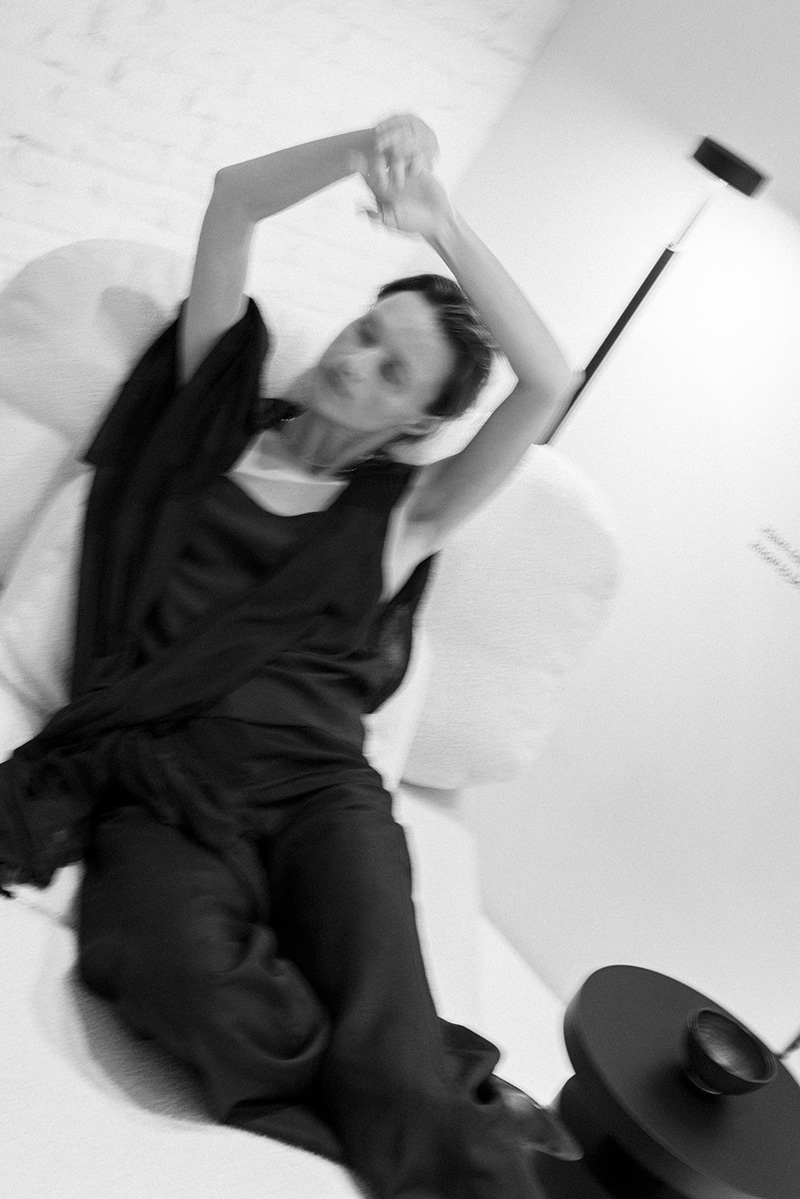
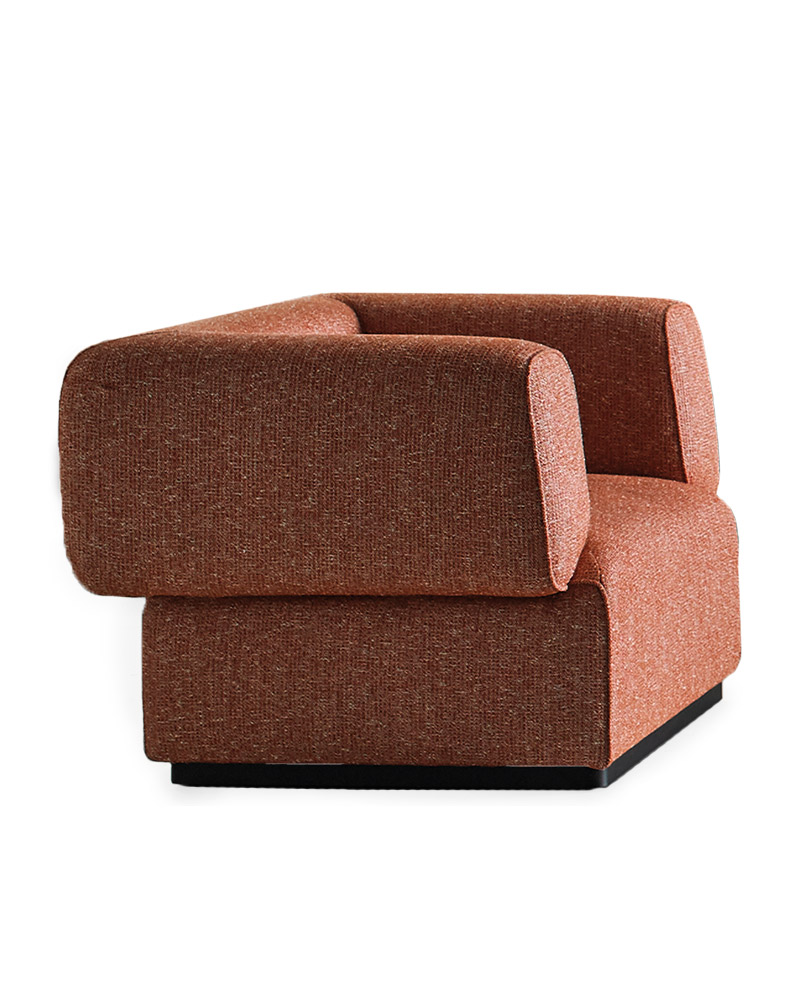
During the presentation of PUMMBA at RI HOUSE, Anastasia Primak turned the sofa into a partner and the space into a stage. The model and dancer reflects on how dancing—even with an object—can be a way of coming back to oneself.
HOW WOULD YOU DESCRIBE YOUR RELATIONSHIP WITH MOVEMENT?
I’d describe it as the ideal relationship between people that we all seek. Very often, we get trapped in “toxic relationships”: stress, routine, and problems that pull us further and further away from ourselves and that perfect connection. But once you start moving, you return to yourself, to the present—and that’s all that matters. You feel yourself, you feel the music, and the vibrations you radiate.
WHAT ROLE DOES SPACE PLAY IN THE WAY YOU MOVE?
Freedom! It’s always freedom.
IN RI HOUSE, YOU HAVE INTERACTED WITH A SOFA. HOW DOES YOUR APPROACH CHANGE WHEN THE “PARTNER” IS A DESIGN OBJECT.
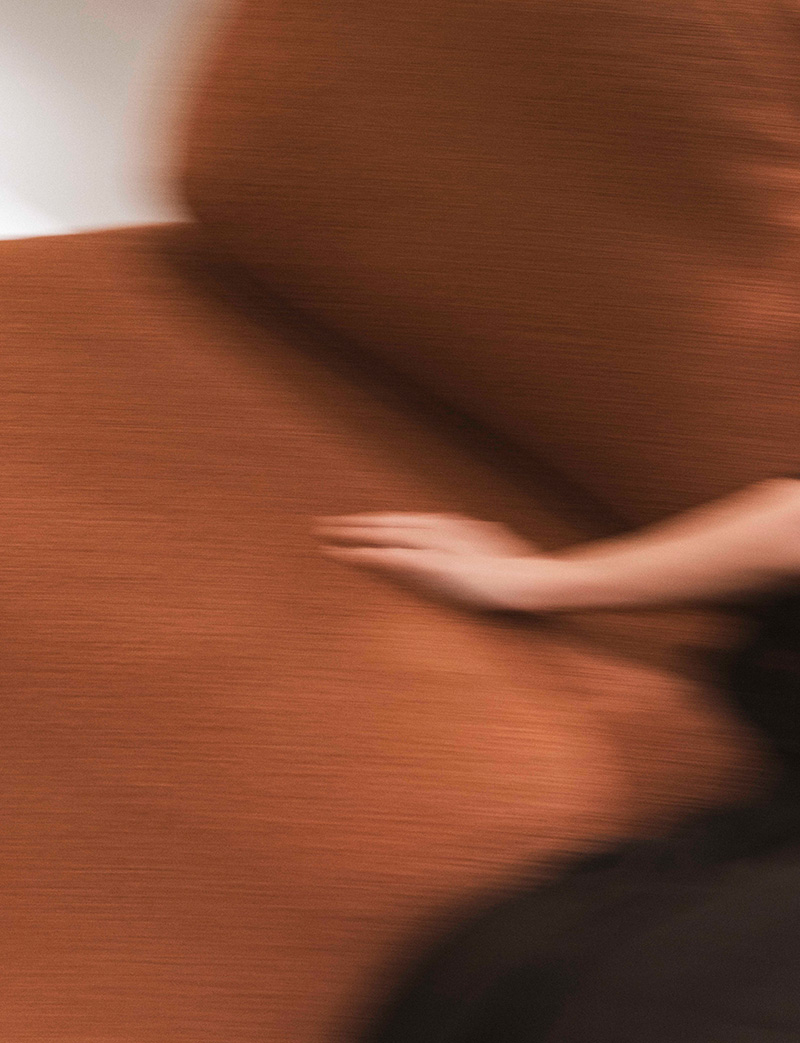
It’s like dancing with a partner: you have to feel the object the same way you feel another person’s body. So the approach doesn’t change when it’s an object. Sometimes we dance or interact with people, sometimes with an object, sometimes just with ourselves—but the approach is always the same: you have to feel who or what you’re interacting with.
WHAT HAVE YOU LEARNED ABOUT YOURSELF THROUGH DANCE?
When I danced as a little girl (and still do), my movements were always soft and careful. As I grew older, I realised that this was a direct reflection of who I am. I wonder if learning a movement style opposite to the one we naturally express would shape our personality in the same way our personality shapes our movements.
A PLACE, A SOUND, OR A MOMENT OF THE DAY THAT CONNECTS YOU WITH YOUR CREATIVE SIDE.
Traveling. Planes and trains are where my mind creates the most, and seeing new places always inspires me. Also, the calm moments of the day, when the city is asleep, and I’m walking along the beach with music.


